You've finally broken loose from work. Three friends, one tea time, and then the text. Honey, there's water in the basement. Not exactly how you pictured your Saturday. That's when you call us, Cincinnati Insurance.
We always answer the call. Because real protection means showing up. Even when things are in the rough. Cincinnati Insurance. Let us make your bad day better.
Find an agent at c-i-n-f-i-n dot com. Happy Holidays! Want to give your host a gift? Consider subscribing, rating, and reviewing the show this holiday season. It really helps the show grow.
From all of us at Believe, have a Merry Christmas, everyone, and a Happy Holiday. In a crude laboratory in the basement of his home. Hello, everyone, and welcome back to the show. Today we have a tremendous episode for you. A wonderful, wonderful conversation.
A conversation that's going to be ear candy. Like, really good ear sex filled with multiple ear explosions for you on this Thursday. And that is going to be a wonderful conversation with Billy Vangura. Billy is known for hot takes on LinkedIn and Twitter. Being a tremendous agency owner.
A wonderful professional of our space. And someone who challenges both the new thinking and the old think of the industry. And I don't know too many people who are willing to take shots at both the kind of more progressive, tech-forwarded, sure-tech-focused aspect of our industry, as well as the way the industry has always been done. And he's finding that middle ground. Just absolutely respect the hell out of Billy.
Love every conversation I have with him because he always makes me think. And this one is no different. Before we get there, if you enjoy the podcast, you'll love the blog. Go to FindingPeak.com. Subscribe today.
It's an email a week. You get a thought-provoking article. I'm writing all kinds of stuff about peak performance, about running your agency, stuff I've learned at Rogue Risk. I think you'll love that. And a big shout-out to our friends at Tivoli, T-I-V-L-Y.com.
Tivoli creates that foundational, consistent growth in your business when it comes to small commercial and middle market. I mean, we get some accounts through Tivoli that are occasionally $50,000 to $100,000 in premium. The key is Tivoli's delivering warm phone call transfers to business owners so that your team or yourself can take those leads and write them quick. They're consistent. You can really dial in all the triggers.
You know who's calling from where. Love Tivoli. Love that they're a part of this podcast. But also, we've been a paying client of Tivoli's at Rogue Risk for more than two years. So, not only a client, or not only the spokesman, but also a client, I guess you could say.
All right. So, let's get past all this. Get on to what is one of my favorite conversations I've had in 2023, by far. This conversation that you're about to hear with Billy Van Jurn. I'm going to shampoo.
Yeah, I don't produce the video anymore because, one, it's just too much work. And, you know, I hate asking people to like, you know, people get kind of like, you know, which I get. Like, when you know you're going to be on video, people kind of like, want to look a certain way, and they're worried about the way they look. And so, I use the video just for the conversation so we can see each other and see our, you know, see our expressions. And I feel like the conversation goes a lot smoother when you can see the person.
But I don't produce the video. I know some people do. I get it. I know that. I know.
And what's crazy is, and I have never enjoyed this, but, like, personally, but there's a lot of people that like watching, like, podcast conversations. They like watching it on YouTube. Like, you get probably, if you produce, if you produce your podcast and publish like this, like this Zoom video on YouTube as well, you can add like another 30 or 40% in some cases. And, you know, that could be a lot of extra views. But, you know, I still, you know, as much as I do this, and I, you know, lucky to have Tivoli as a sponsor and that basically pays me to pay Cass and, you know, whatever.
It's like, I don't really make that much money. I basically, basically affords me like a few dinners. You know what I mean? It's not like it's a huge thing, but, but it's appreciated. And really, you know, it's still just fun.
Like, I just, I like bringing people on that I like, that I want to talk to and sharing the ideas and stuff. And it's still just something that I do mostly for fun, you know, for fun. Than it is like trying to make a business out of it, you know, like Bradley and Scott and the things they do. Yeah. I think it's amazing.
And I think it's awesome how they've grown their audience, but, you know, they have like a full-blown studio with a production. I'm not interested in that. You know, I think it's awesome. I just, you know. It's the whole content thing for me.
I'm a capitalist. I appreciate you earning money, however you choose to earn money. Good for you. You're not harming anybody. God bless.
But I just got other things I want to do. Yeah. And I've recorded and haven't recorded something in a while, but it's like, if the quality is good enough, you know, the audio sound, you can hear it. It's good. Like, man, all the other stuff is just fluff.
You know, I like your intro music. Like, I enjoy it. It kind of leads into things. It's nice. It sounds good.
But like, and all the other stuff. Like, I was listening to one last night and the credit roll was almost like it was on TV. Like the amount of people contributing to doing it. I was like, yeah. Okay.
But it doesn't sound any better than the business pockets I heard with two dudes just with basic setups in their house. Yeah. That's, that's the tough part today is like, you know, you, you, you know, you, you even think about the Joe Rogan show, this guy has what 30 million people downloading his podcast every month. It's basically three people. He's got him.
He's got his guy who does the, the, the pull-ups whose name is escaping. Even those listening. Jamie. Yeah. Jamie.
And then he's got one other guy that does like the production stuff. Like it's basically a three-man show. And then he's got people that like run the building and some other stuff. But like the actual podcast is like a three or four person production crew, including Joe Rogan, 30 million downloads. And then you have like these other shows, like, like I, somebody sent me one.
They're like, you gotta listen to this show on NPR. And first I, I fucking hate NPR, but, um, but you know, like you said, it was like in production with this and this media company and this and I'm like, Oh my God, like the amount of money that this show, which was, you know, I mean, interesting, but yeah. They could have done it sitting on a park bench, holding an iPhone between them. And I put them in just as happy. And like, I just, to me, there's no way for that to be successful long-term.
That is an absolute loss leader forever. If you do it that way, there's just no way for that to be successful. And I don't, and that's like, because we're both in the insurance realm, there was a, there's a thread the other day and, uh, Nick Ayers and some other anonymous person was in there and it's about like SEO and websites and stuff. And you know, this, and I've got data that can back this up. There are plenty.
My website is dog shit. I have four websites. They're all equal levels of dog shit, but I don't need them. I sit in that camp of like Craigslist is amazing. You can bang on Craigslist all you want.
He's sitting on his pile of cash and doesn't worry about your opinion. Yeah. And then you go to somebody's websites and I'm like, man, I've been into your office. Like, I know where you are and who you are. That website's just a front.
Like that is just like, it looks amazing. You spent a lot of money putting that thing up there, but it's like useless. And like you said, like the Joe Rook and stuff, like before you go all in on all this production, all this, just, just be good. Just, just be worth listening to. Yeah.
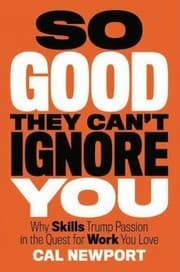
You know, Cal Newport wrote a book back in, I think, 2013 called Be So Good They Can't Ignore You. And it was based off of the, wow, my brain is not functioning today. Shit from the Tonight Show from the 70s and 80s, or not the Tonight Show, the Saturday Night Live. Martin, Steve Martin, Steve Martin, Steve Martin, Steve Martin is, is he, he, in an interview said, you know, someone asked him, what's your secret to success? And he said, be so good.
They can't ignore you. And, and, and basically then Cal Newport took that, pulled that quote out and wrote this really cool book. I mean, you kind of get the gist of the book from the title, but it is a good, you know, kind of airplane read book. And I enjoyed it. But like, that's really the key.
And I think, you know, I, I don't anymore, seemingly, and I'm so glad that there's a new class of insurance talking heads who are willing to answer all these kind of, what I call seemingly, think, think of as seemingly trivial questions about what kind of microphone you have at. I used to get asked those questions incessantly. I don't seemingly anymore. I feel like those questions go to other people now, which I'm happy about. Cause not, not because I don't want to answer the questions, but because my answers are this microphone, which I have just off camera, which you can't see this microphone is 11 years old.
I bought this for 80 bucks on Amazon back in like 2012. And I've had the same, I've, I've, the only thing I've had to replace is I had to replace the arm one time that holds it because the arm springs just atrophied from being so old that I had to replace the arm. Other than that, the microphone, I've had the same microphone for more than a decade. I use a $40 Logitech camera to do these calls and zoom, which calls me, cost me 14 bucks a month. And then I've switched from, I used to use all the Adobe products and truthfully now, like they've gotten so difficult and so time consuming and all that.
I just use the free Apple shit that comes on the Mac computer. Now the iMovie and GarageBand. So like you think about like the, the setup costs, you know, that I do as a cost of the podcast, you know, from cast helps me put it all, put all the show notes together and all the publishing. And that is well worth what that, what I pay for that. But like, but just, it's, it's like, you don't need all that stuff to, to have a show and, you know, and whatever.
And it, I feel like people get too caught up in the stuff and not in the substance. And that's probably a life thing, but certainly in a content production thing. You said this a minute ago and it parlays to so much stuff is the, they don't ask me anymore. I guess because you're a person that's asked a lot more than me, right? You are a known entity out there.
You did a post on this somewhere. There's a blog post. There's a video. There's like, yeah, you already answered these questions. And then they come ask them of you, right?
And now I get it. They're having a dialogue. It's the same reason I don't engage in any of the Facebook message stuff because the new people are, yeah, they're lazy. Yeah. Go look for the information.
Now, if you find Ryan's post and you have a question about his post, by all means, you should send him a note. But the answer is already existing. And now you're going to waste my time by asking it. In fact, you know, and like you said about the substance part, I'm like, man, like I started putting some stuff out and I had a bunch of stuff backlog. And I said to somebody, it's like, ah, you know, I didn't share all this.
I spent two years putting all this information together. Like this is handpicked, hand curated. But no one's got to execute on it. So what the hell's the point of keeping it on my computer? Here you go.
Like I said to a bunch of people and I was like, you're not going to do anything with it. So who cares? It's, you know, I don't, I don't know if you listened to the episode that I put out recently. It was the full keynote that I did from the One City World Tour. Oh, it was so spot on.
The second half hour, I was sitting here, we've interacted a bunch before. I remember the first 25 minutes of the tour. Yeah, yeah, yeah. The second half hour is so, and it's embarrassing that I get frustrated by it, but it's like, I think I wrote it. It's $880 million in funding.
Yet they can't complete leads. Like, you're still, I did this and I keep a separate email address. If I see a new service, I sign up just to see, hey, I left your call flow. How's it work? I think it was next.
I ended up in some shop in Missouri. They couldn't help. And then they passed me off to somebody else. And I was like, whoa, whoa, whoa, whoa, whoa. How is that possible?
Like, you're not, you're not even a broker. You're just a lead generator. Yeah. Like, how could you imagine in your world getting leads and passing them off? Like, we do it as brokers, right?
Like, if you just don't have the right fit. If it's just a big commercial thing. I am just not the right guy. Here are some suggestions. Could you imagine just, that's your business model?
I'm going to generate traffic and then I'm just going to farm it out? So it, so I have, I have a bunch of feelings on this. Cause in, cause at Rogue, I've had to solve a bunch of problems that I never had to solve before. And then I didn't necessarily see coming in looking back. I probably should have, but you know, I, and one of those issues was because of COVID.
And I talk a little bit about this on other shows, like because of COVID I kind of had to survive, right? Like I put like 40 K into this business. No idea COVID's coming. It's going to be a middle market, you know, high touch white gloves shop. I'm doing all the killing commercial stuff.
I'm working with Mick Hunt. And basically I'm using Mick stuff and David stuff and my own stuff and all the other people and I'm mashing together. And what I believe is like going to be this awesome best in class, New York, you know, New York only middle market shop, right? This is what I wanted Rogue to be the original vision of Rogue. That's what it was, right?
And it's like me and like a couple, you know, a couple other service people and like we're writing accounts and being world-class boutique. That was Rogue. That was the original vision of Rogue. 40 K, all the systems, everything I needed. I am ready to go.
I'm excited. Jacked out of my mind. One weekend COVID happens. It all just, it's like I lit the whole thing on fire. Every plan, every piece of marketing material, half the tools that I had purchased to service middle market accounts, just light them on fire.
They're useless. Okay. So when I pivoted to the small commercial and I started doing all the content on YouTube, the unfortunate thing about that is it is incredibly difficult to target geographically. And also no matter what you do, it is very, very hard to target industry. So one of our biggest problems up until very recently, which I'm happy to talk about how we've, at least we're trying to solve it today, is, was, dude, I don't get to choose who contacts us, right?
So it's like, I got plastics manufacturers from Southern Louisiana and, you know, shotgun retailers from East Montana and, you know, and all these, and also shit that's kind of down the middle and stuff we really want to work with. But like, what do you do with them? And to be honest with you, you know, I can see how, like, so I did an interview a few weeks back with the CEO of Tivoli and, you know, basically what happened to them is what happened to us, but he chose a different path and they were a digital shop, had a very similar challenge to what we had. And basically he just started to get frustrated with the insurance sales part and said, screw it. We're going to sell the insurance sales part and just distribute the leads.
And so I can see, I agree with you. That's a really tough decision to make. And I obviously chose to go a different way, but I will say that there is such a large amount of frustration around where does the business go? You know, yes. You know, a perfect example is Hartford loves landscapers in about 35 states.
Love them. Probably one of the best carriers in the country for landscapers is Hartford in 35 states and the other 15 states, they either won't write them at all, or they're not even close. How the hell do you know which states are the ones that they will and which ones they won't? You know, like, it's like these kinds of, these are like the crazy, silly challenges that you come up against that like, and by the way, anyone who knows how to code that wants to help me solve that problem. I will, I have, I have the solution mapped out.
I just don't know how to make ones and zeros make things happen in the magic box. But like, you know, these are the kinds of things. So I can see it. It's not, I agree with you. It's not the business model I would want, but I can see how people get frustrated with that and go that way.
Because especially in commercial, personal line is completely different, but in commercial, holy shit. It's just so dynamic. It's, it's overwhelming. So, and even, and it's, it's, I think it's good that other people would hear you say this because it's like, you are, you've crossed that hurdle where you've got your 50 states license. You've got a market in every state, not necessarily for every risk.
Yep. Technically speaking, you have carrier representation in every state, right? Yes. Yep. What, what I continue and it's, and I go back to something and I paraphrase this because I don't know when it was, but like you had said, like, who the heck am I, you know, to tell some billion dollar operation what to do?
Yep. Because you and Cass just, just going off on a ransom time. And that stuck with me because I fall into that trap, I felt that I trapped last Tuesday, I think it was, I snapped on, you know, at my level, I'm talking to the underwriter who did a field thing and they changed the rate. And I'm like, you know, you're just following corporate policy. It's crap.
It hurts me. I'm going to bear the brunt of this, but it's crap. Like, what would you do differently? I'm like, I don't, I'm not paid to do things differently. I'm paid to fill in the boxes you give me.
I'm paid to produce business. You pay consultants for ideas that don't work. If you want my ideas, we're going to have to figure out a way to do this. And it's, but I fall into that trap of making suggestions because what I don't get is, I remember talking with a large brokerage, not too far away. Yeah.
I said, I want to get to a billion dollars of premium. And I was like, well, that's pretty easy. Your size, like you've got this and this and everything's already solved and they didn't get there and they're not there yet, at least publicly, right? Like, at least the numbers that go up in the rankings. Yeah.
How does that happen? Like you have all the resources and you're just not putting it together. Like there's always this dispatch where like a guy like you has figured out so many pieces and then the guy with the other pieces just isn't interested in solving those problems. Dude, this is, I'll tell you, I, I think, I think you just, I mean, you just nailed a major problem, right? So like I sit here every day and even though SIA has been amazing and I want to give them credit because they really have.
And I know they get banged on a lot and I know they're not perfect. And I completely understand all that. And I understand none of them are, none of those, none of them are. And I get that people will write me messages, Ryan, they did it. I completely get it.
I also know that the Matt Masiello version of SIA is a completely different organization than his father, right? It's just different, different, different philosophies. Again, not saying right or wrong, saying different philosophies. That being said, um, you know, they've helped us a lot, but they're also not, it's also not 20. It's not like I got a $20 million check to grow Roe, right?
We still have an operating budget that is reasonable. It's, it's much bigger than when I was putting the entire payroll on my credit card and then trying to find ways to pay it off, you know? So it's a little different than that scenario that what it was beforehand, but, um, but you know, it's not like we have mega money. We have, we've, we're, we're growing and doing great and, and, and all that, but, but it's not mega money. I look at these carriers and, uh, uh, that are trying to go direct.
I look at insure techs that raised five, 10, you know, I just had a call with an insure tech that was launched in 2016 that some people would know the name of. If I told you that is now that I'm, that we're considering acquiring, um, cause I want the tech dude, the, the, they raised $12 million. And if you saw the amount of premium and what they actually had for $12 million, I think about what I could do with $12 million. I mean, I could turn $12 million into two, one, uh, yeah. Yeah.
Yeah. I mean, the things that I could, I mean, I think about just, just the simple shit that could just, I mean, just absolutely explode in the arbitrage that's available in the market, just a crush. And, and, and, and like, and the, just the money that's been wasted. And like, I did 57 VC meetings back in 2021 and went over 57 and these jackasses gave this guy 12 million bucks and they got about $250,000 in premium and, and, uh, and, uh, and a platform that is pretty slick, but no idea how to use it. And now they're wholesale and now they're like fire sailing.
And I look at that and I'm like, Oh my God, like the people with money, they don't want to eat, they either don't want to take chances or they want to, they want to give the money to these MIT Silicon Valley dicks or, you know, or the people that have solved the actual problems. They can't get any money because they're not building proprietary tech. And I'm like, this, it's so wacky how this works. You know, that's what I heard. Oh, for 57 for one reason, no proprietary tech across the board, every email, every response, no proprietary tech, sorry, can't help you.
I'm like, that's silly. That's crazy. I don't, I've got, you know, a bunch of versions. I've sat in the offices. I've said, listen, I appreciate what you're doing, but here's what you're going to run into.
And now it's three, four or five years later and you're like, Oh, I told you, like, you know, I, I mean, I went through kind of like a self audit and I deleted so, I mean, literally a thousand emails either with no replies or sort of polite replies. And I'm like, look at where you are now. But at the same time, they probably cashed out. Okay. Yeah.
They didn't put any capital in. They didn't put their blood, sweat, like to really get things going. So they probably ended up okay, but seeing that continue to occur, it's just baffling. And even on, even on your side, I'd wager like, if you were like a next and, and, and it's an ongoing thing in insurance, you would struggle to find people. Cause you've ever, you talk about this with like trusted choice.
You're actually in a, probably in a very similar scenario, like States, the dynamite manufacturer in Missouri, like maybe you shouldn't be touching that, but there's 10 agents in Missouri who have the markets and depending on the premium can't be bothered. Yeah. And I'm like, oh my gosh, you make me want to vomit. Like you just like, but, but I respect you. I respect you making your money and doing your thing.
But like, holy cow, it's a layup. It's not even a sale. It's a, help this guy buy and they're going to ignore it. It's dude. Our industry is, is so, I mean, this is what I find so dynamic and interesting.
And the, you know, these frustrations that we're discussing are also what make this so interesting, a place to work, right? Like, like, you know, people come in and into the space and you meet them and they're, they're fresh and they're doing things and they have these opinions. And, and, and I love it because we always need fresh perspectives, you know, as long as people come in, my perspective, my, my first filter is always, do you have respect for the fact that this is a 440 year old industry that is not broken? Like, do you operate from that mind frame? Yes.
Okay. Now I'll hear all your crazy ideas, you know, because, because, because if you come in and your first thought is this is broken or you're, you only understand like three to five years of history, or you think that it's, you know, it's, it's, you know, I know I can, I can that filter alone. If you don't pass that first filter, you are, and that is so many of the 2015, 2016 insure techs that came in and told us all that we're toast. They're the ones who had no respect for the industry, no respect for where we came from and the people that are in it and how it works. The people that do, um, or the ones that spent even a small amount of time in agencies.
Those are the ones that I, you, you look at their products and whether the product works for you or you agree with the product, they're sticking around, they're doing good stuff. You know, I think about like, here's a perfect example. I actually just liked this post on LinkedIn, um, Aaron Steffi from propeller bonds, right? Some people like the model. Some people don't like the model.
I think it's brilliant. We use propeller bonds for a lot of stuff because especially for the smaller ship, man, they're so easy. They're great to work with. Um, but Aaron came from a family agency outside of Philadelphia. He got a taste for the business, found this thing that he was interested in, that he thought there was a gap in the market.
He had the expertise and the guy took a shot and here they are. You know, he, the post that I liked was a cameo from, um, the guy that played shooter McGavin, like one of those. Yeah, it was pretty cool. Um, but I'm like, you know, and the announcement was that they have 2,500 agencies on propeller bonds now. And I'm like, you know what?
That's an idea that if he attacks the market, the, the Silicon Valley dick takes that idea and goes, I'm going to cut agents out and write all the bonds myself. Right. Instead, they never went direct. They, every bond they've ever sold has been through, through an agent or through, you know, a licensed person and here they are 2,500 agents growing like crazy, great business. And I'm like, these, like he passed that first filter, understood the business, had respect and here they are.
Um, it's just that kind of stuff to me is that, you know, that that's what excites me is that for every five, 10 companies that are just garbage, that will never actually make it as loud as they get, you get a propeller bonds, which is really a value add to our industry as a whole, in my opinion. See, you've covered like two things there at once where it's the, they see the size or size potential, like, eh, I don't know. Instead of realizing what insurance is, is that you take that bond and that bond's probably in place for three to 10 years. No service, just write a check every year, done, finished, whatever. And they look at the 2,500 and they poo-poo that.
I'm like, you know, all right, good. That's your economics. Except had you invested in that, you're looking at a conservative five times return on your investment. If you could just be patient, if you just give it a couple of years to get those agents on board and get that there, all of a sudden you're going to look and be like, huh, I got this drip in recurring revenue. All right, what else can we do?
And that's where I think if you take that model, I can't understand what's next. I talked to a guy, I'll tell you offline, it's probably not fair to say it out loud, but like $500 million in premium, all sorts of locations. And he said something interesting and I've known this, but then to hear it from his side, a guy who's acquiring agencies and doing things, it kind of like punched me in the face. He's like, yeah, but what is an actress you're going to do now? You've half acquired a bunch of operations, you've fully acquired a bunch of others, but what are you actually doing?
And this is where I've personally maybe sabotaged myself on a few occasions where I said, I respect your roll-up, but it's not enough for me because it's actually not that challenging. You have money, you have a process, you're just going to apply effort to that and be a little patient and you're going to roll up businesses. It's wonderful, it's good for you, you're going to make your money, but what next? That's where I think the propeller bonds in the world, that's where I think the MGA's program kind of business becomes really super interesting because at some point, characters have to push back, like they have to. And at some point, somebody smart is going to get ahead of it and say, you know what?
I bought up all these operations, I've got 50,000 customers, they weren't cross-sold. If I've got the best bonds set up in the world, I've probably got a thousand bonds in my book. I just don't even know they're there. That's where I think those things get really interesting is when the people with the existing books, like I've tried this for a number of years, everybody wants to sell you a social media setup, everybody wants to say, I'm going to get you more traffic and I come back with, cool, I've got 6,000 prospects already in my system. I've got 3,000 of them that will respond to my email or my phone call without even a question.
Make me money off that. Go find me 6,000 strangers, take the data I have and drip new products to them. Now you'll get my attention and I'll split the revenue with you. If you're so good, you shouldn't be worried about it because your system works. And it's always a no.
It's always a no. I want you to pay me to set this up and this up. And I'm sitting here saying, you make this platform and there's 2,500 agents that will sign up for that platform because you show it, it works. I don't know. You know, you're completely right.
Book optimization and revenue per client max maximization is the key. And this is one of my major beefs with the agency management systems in general and why, you know, I don't, we can't, you know, they've just so missed the mark and everything. There's so much friction in, in bitching about agency management systems is tired and I don't mean to do it, but like, these are some of the things that they completely miss on, right? It's like, it's today there. How do you build a system that allows me to know who has a bond, who doesn't and send automated messages to those people and then get a response to them?
Why can't I send an email that says, Hey, do you have a bond need? Yes or no. Let us, if you say no, I'll never send you another issue about bonds again. But if you say, yes, we, one of our team members can reach out and show you the examples and, or, Hey, you want to do it yourself. We have this do it yourself option through this, through one of our partners that allow you to buy the bond yourself.
So we're, we're testing, you know, one of the things I believe is a major mistake. Most, most, uh, I shouldn't say mistake. I have a theory that a missed opportunity for many, especially larger, I don't want to say a smaller, maybe single location shops, but like larger shops with it, with a decent amount of, of clients, you know, thousand plus three, you know, 2000 plus clients is do it yourself options for quoting and people go, nah, nah, you need an insurance agent. No, I hear that. But for there are, there are products and small bonds are one of those products.
I'm not talking $5 million performance bonds and stuff. Yeah. You probably, you need, you know, you need a surety specialist involved for a lot of that, but like these little $200, $250 municipal bonds and janitorial bonds. And, you know, why can't that person? Sematos need bonds.
Sematos need a basic bond. Like, I'm finished. What's up guys. Sorry to take you away from the episode, but as you know, we do not run ads on this show in an exchange for that. I need your help.
If you're loving this episode, if you enjoy this podcast, whether you're watching on YouTube or you're listening on your favorite podcast platform, I would love for you to subscribe, share, comment if you're on YouTube, leave a rating review. If you're on Spotify or Apple iTunes, et cetera, this helps the show grow. It helps me bring more guests in. We have a tremendous lineup of people coming in, men and women who've done incredible things, sharing their stories around peak performance, leadership, growth, sales, the things that are going to help you grow as a person and grow your business, but they all check out comments, ratings, reviews. They check out all this information before they come on.
So as I reach out to more and more people and want to bring them in and share their stories with you, I need your help. Share the show. Subscribe if you're not subscribed. And I'd love for you to leave a comment about the show because I read all the comments. Or if you're on Apple or Spotify, leave a rating review of this show.
I love you for listening to this show. And I hope you enjoy it. Listening as much as I do, creating the show for you. All right. I'm out of here.
Peace. Let's get back to the episode. Real estate agents oftentimes need bonds in many states. Like there's all these little bonds that people have to buy. That should just be bang, bang, bang, bang.
And then they auto-renew every year. And you take a company like Cincinnati, their surety department rolls up to your contingencies. So now you have basically, you build a surety book with a company like Cincinnati. And now you're essentially, you're building like a zero loss, you know, zero loss ratio product, essentially, you know, unless something really terrible happens, into your book. And you build a substantial amount.
Think about how much that pushes your loss ratio down. Like these are the types of agency optimization techniques that as we continue to grow at Rogue and I look at how easy new business acquisition is. You know, that's one of the biggest jokes to me is how new business acquisition is hard. If new business acquisition is hard for you, honestly, this may not be the business. Like this new business acquisition is not hard.
It's work, but it's not hard. It's just work. Would you agree it's easier today than when you started? The forgetting your knowledge part, I believe it's actually easier. Exponentially, easily.
Exponentially easier. Not even close. Because with social and branding and email and cold drip and dude, I was doing, you know, because, you know, I get a little crazy. There's this tool that I was looking at here. Let me look up the name real quick so people can check it.
Actually, part of me wants to not tell you guys, but I'm going to anyways. I just want to tell you the name of the tool. It's, yeah, yeah. No one will actually do it. Windsor.io.
So, what this tool allows you to do is you record a video one time, okay? So, let's say I was on here and the video was like, hey, Billy, just want to say thank you for purchasing insurance through Rogue Risk. I am the founder and CEO and it means, even though we may never actually interact, I just want to tell you, it means a lot to me that you're here. Our team is going to take care of you. Our proprietary, blah, blah, blah, blah, right?
45-second welcome video. Well, all my team needs to do is plug in the person's first name and I never have to record that video again. The AI takes it and makes it so it looks like I am saying and it recalculates my voice so that it sounds like I'm saying your name. And then, you know, and then Jason and Sally and Tammy and Tommy and whoever, and it's the same video, but AI generated voice and mouth movements so that it looks like a personalized video every time to every customer. And then you can scale that out to every customer every time they purchase.
And now it feels like they're getting this incredibly personalized thing, but you literally did it one time. Like, that kind of stuff to me, that's solid gold. That's our business, right? That's like, you want to grow huge and have people love you? These are the kind of tools that do that.
Not, you know, I mean, not the Facebook ads or whatever, but like, pay somebody to do your Facebook ads for you if that's what you want to do. Like, don't, this is the kind of shit that like takes our game to another level and helps you optimize your book because it makes people feel the warm and fuzzies. And it's like, this stuff is coming. Like, if you're not thinking about this, can you survive today? Yes, you can.
Can your kids survive? No, I'm going to fuck on your kids. I'm going to eat your kids lunch and put your kids out of business. You will be fine. Right?
But like, that's the way that I think, you know, and not just me. There are other people, other rogues out there. There's guys like you. There's people out there like, I'm coming for you. I'm going to do what's necessary.
You'll survive. Your kids will not. Sorry. I'm just going to chip away at you. And even like you said, personalize that, you know, and gosh, I just, I need the self-control to stop asking the carriers for these things.
We've acquired four businesses. Yep. Through these businesses, I now have five American modern codes. Five. Now, average premium is like $100 a policy, right?
So I'm not a big hitter with them. But nobody will allow me to consolidate it to one code that I can manage with one login. Guy says, can you do $250,000 of business this year with me? And I says, you can't even make it so I want to do business with you. And did you look at my average policy cost?
It's $100. It's classic cars and it's jet skis or snowmobiles. Like, I can't even tell from the policy I'm looking at. Well, then, you know, we can't help you. So I talked to the companies that have the codes.
They're like, well, it takes a year. You need to sign a broker record. I'm like, gang, you're paying me $7.50. I'm not going through the effort of signing a broker record just to consolidate that stuff. But if they're not willing to do that, and then I charge for them.
I say, you know, if I could pull the data by your name and your address, there's ways to pull stuff up. We could bang on the management systems all in a while. Between PL Raider and Google, I could get a pretty darn good profile on 90% of the households. I know you can look up who has a car older than 1980 registered. Why don't I just give you my 6,000 addresses?
You run it across there for $2 a pop or whatever. Find the classic cars. And then we will literally send them a quote. We'll get a massive, well, you know, that'll cost us a couple of dollars each. And we're not sure.
But the information is available. And you want more business from me. You know I can't prospect for classic cars because you don't pay enough for me to prospect for classic cars. And you do nothing with it. What am I supposed to do with that advert?
You know, what are we supposed to do here? And that's where, to your point, I had a big shop. That what's next part? You know, a friend of mine, he says, smoke them out. Right?
Like, I've researched the state of New York. I can show you maps. I can show you everywhere I've driven. I can show you the agencies I've seen. And I feel bad saying it, but I don't need you to sell me your business for me to take your business.
Yeah. I can run it off zip codes. I know who your carriers are. It would take a little longer, but I can put you out of business. And like you said, it may not be you, but your kid's not taking over when I chip away half the revenue.
You know, and it's doable. I don't know. It's interesting stuff. The AI stuff you said, and I'm sure you've had your own version of these conversations. I've seen stuff that scares me.
Like, there's a company in Europe. I've met with them a few times. They were in Manhattan, and we met, and they showed me. They said, well, give us a list. We're not going to do anything with it.
We're going to show you what our product does. And the stuff they could pull on you just on your Google address, you know, just under your email, rather, it's freaky. It's just downright scary. But I get it. And the challenge I told them is probably the same thing you know.
Carriers aren't ready for your data. Same as Hazard Hub, right? They've been bought by Guidewire. Their biggest challenge is not that they've got the right information. It's that the carriers aren't ready for your information.
I mean, I'm still picking protection classes with billion-dollar companies. How is that possible? The data exists. The correct data exists. And you're still making me guess based on who has a well and who has public water.
Come on. Dude, this is our industry, unfortunately, just like our government, is run by bureaucrats, not by leaders. And if you're a middle manager and someone comes to you and brings you this project, hey, let's make sure the protection class is right for every property across the country so when one of our agents pops it in, they don't have to put in 1, 2, 3, 4, 5, 6, 7, 8, 9, 10. It just pulls automatically. It's not even a question, right?
We just know. The only thing that can happen to that bureaucrat is that that project costs too much, gets screwed up, or doesn't work well, and now they're in trouble. So they go, meh, I'm good. No thanks. So we just kind of keep moving along.
So I'm a big fan of Michael Leibor and what he's doing at Insurance GIG. He's got an enormous, enormous project ahead of him. But the things that he's trying to do, I think, are worth our effort. And basically, the core concept is, I know it's much bigger than this, and Michael, if you listen to this, please don't think I'm trying to diminish what you do. I'm just trying to give a broad stroke.
It's kind of a zappier for insurance products for agents or for agencies and carriers. So we're talking about, hey, and he's got Hazard Hub linked up. He's got Fenris linked up. He's got Relative 6 linked up and a couple other databases. And I was like, I'm talking to some carriers and similar projects, right?
I mean, you and I think very similar on how do we create these opportunities at scale with the data we have and all this kind of stuff. And I was like, okay, can we pull small businesses in this state of this class and then just rip in Fenris, rip in property data from Hazard Hub, and rip in the Relativity 6 data, pull it all together, and then just batch quote all these guys. And then what I'll do is freaking cold email them with, you know, essentially, you know, call them like introductory quotes. Like, hey, you know, we need to clarify a few things, but based on the data I have, we could potentially get you, like, let's say a workers' comp policy for X amount, right? And there are certain carriers right now that have LCMs that are, like, literally 1.01, right?
Like, literally, you're basically playing flat rate or, in some cases, even less than that. It's crazy what workers' comp rates are with some carriers right now in certain class codes. So it's like, this is a way to absolutely scale and dominate, and it's like, the carriers can't put it all together, and then they're like, well, we're not sure about that data source. And I'm like, who do you believe more? Me, who I will lie to you in 10 seconds if it gets a policy written, right?
Or the data that comes off of these big, huge databases, it's their freaking job to be accurate. Like, it's just crazy to me where our mentality is and our lack of willingness to take risks on some of these things. It just, you know, and then you look at a coterie, and, like, I don't think coterie is perfect, but, and I don't love that they went direct. I really don't love that they went direct. But their product, the ease of their product is so crazy.
It's so easy. And the policy forums are good. Again, not perfect, but good. And, like, I just say to myself, like, coterie is probably, it'll be decades before they're ever able to actually make a dent into some of the big carriers. And the scale is the problem.
But, like, the things they're doing are so far out ahead of these companies that seemingly should be just leading. It just boggles the mind. But do you get, I'm just fatigued by the whole thing. I've got all my own stuff I've got to work on, and I'm just like, you said it with the data. Frisk is the company that bought them.
And I came to think of Pius' company. This guy, Pius, showed me that everything you just described, I saw this years ago. Yeah. And I said kind of what you just said. It's like, the problem is, what are you going to do with the data?
At the Hazard Hub, I remember meeting those guys in Hartford and, like, seeing their demos. Like, this is amazing. Well, nobody's up to it. I still, I don't know why I'm so long on viewspection. This guy out in Arizona, he owns a property inspection company.
Like, he's correct. He's been correct for years. Yet, I still have companies spending $400 or $500 to send a human being out to a property to take pictures of a house. And I'm done. Like, I just, are you going to pay me for my time or some other arrangement?
Like, I just have other stuff I need to be working on right now. And it's just so fatigued when you know the answer is available. But back to your original point, and it really is, like, this is how unbroken insurance is. They're making so much money. We don't need to make these changes because we're good where we are.
And listen, I'm 100% certain the best thing any national or even super regional company can do is audit their books right now. Shrink the overall premium size, probably lose some PIF count, and profitability will fall. Like, but they don't need it because they're already profitable. But come on. And I know maybe you're not, like, right in the weeds with the quotes necessarily today.
But, like, the stuff I'm replacing, and then you look at the – like, I kind of stopped looking at debt pages because if it's been in books for four, five, ten years, whatever it is, there's nothing accurate about what was rated four, five, ten years ago. And nobody's correcting this stuff. And even I've gotten pushback when I said I lost a little over $12,000 like a month ago on a profit sharing thing. The book shrank. Well, I raised deductibles.
A couple of accounts went to another agent. It's from an acquisition idea. So you didn't actually lose the premium. And you saw the dozens of policies I rewrote correctly to correct premium. And then you dig me on profit sharing.
The profit sharing number, like, I went down from $0.40 to $0.28 or something like that. So we went down, like, $0.20. And you know it's better because you saw all the paperwork, all the adjustments. And you're going to screw me out of profit sharing? But that's the contract, right?
Because that's the dirty little secret. The dirty little secret is quality of coverage only matters in presentations. It does not matter, in truth. It's premium, premium, premium, premium, premium. That is 1, 2, 3, 4, 5.
You know, a loss ratio then comes in at some point in there. But, like, all that really matters is top-level premium because that's what most of these people are getting bonused on. And then loss ratio is a conversation that uses a tool against us. But, like, quality coverage, raising deductibles. I mean, like you said, you could go into a book.
Let's say you had 100 clients, right? Just for purposes of easy numbers. You had 100 clients. And their deductibles are all super low and out of whack. And their coverage sucks.
And you go in and you raise their liability limits. You push their deductibles up on property so they're not going to pay out nickel and dime claims. You know, and ultimately, the premiums come down in aggregate, right? What you just did was create a highly profitable, much, you know, much more sticky, much more retained book of business that's going to be great long-term for you. And you're going to get screwed in terms of revenue to you and to your agency.
And, you know, I guess that's part of just the way the world works. But I get it. And I think you said it. There is a point where, like, I have saved a lot of these types of conversations for just the podcast because I am fatigued. I like having them, like, here in these venues because it's fun and you get to talk and whatever.
But, like, all the Facebook posts and the LinkedIn threads and I just – I'm fatigued by it. It's like there is a reality of the way the world works. I have a business model that I'm going to execute because I think it's the way that I can leverage that world to do right by customers and make money. And that's what I'm going to do. But the days of, like, trying to convince people that the shit that you and I believe and seemingly I think is the way, right?
Done convincing. Done convincing. You either believe it or you don't or figure it out on your own. But the convincing days are over. Yeah.
Yeah. No, and really it's even – and even like you said before, like when agents and leads and stuff, like I've driven around this state a couple of times. All my focus is New York. I've met dozens of amazing agents who, like, you don't even know they exist. They barely have a – they don't have a Google profile.
They don't have a website. But they own their building. They've been in business for 35 to 65 years. Maybe they took over from a parent. They've been betting $100,000 a year in some rural village for decades, writing everything off through the business.
They're even as garbage. Yeah. But yet, they're better than you and your new company – you know, not you, but you know what I mean? Yeah, no, I know exactly what you mean. Your big, fancy, shiny thing.
And I'm just like, they're actually some of my biggest challenges because the math is just not there. Like, they are correct. Their business doesn't go anywhere. And by our standards, they treat their customers like shit. They're overpriced.
They haven't remarketed a piece of business in years. Nobody questions them. And if they leave, they've already done the math in their head. They don't really care if Sally leaves because they've already made money on Sally. And it's beautiful and disgusting all at once.
Yeah. Really, that's been my biggest challenge for years now. It's the lifestyle agent. The thing – you know, I say this. Yeah.
Whenever someone – whenever, you know, every once in a while, I'll get pulled in by a carrier and they'll ask me some questions about this or that or whatever. Like, I fucking know what I'm talking about. And, you know, I'll say to them, like, are you building this for growth agents or lifestyle agents? That's the question I start asking. Like, I hear everything you just said.
You're like, don't pitch me something. We're going to do blah, blah, blah. We're going to do this whole thing. Okay. Is this for growth agents or lifestyle agents?
And they'll kind of look at you. Some people will get it and then a lot of them will look at you like, what do you mean? And I'll be like, because if you're looking at your agency plan and you haven't carved out lifestyle and growth agencies, then this is screwed day one. Lifestyle agencies will – could give two shits. If their spouse has a new 7 Series, if they have a house in some place that they like to go other than their hometown and their lights are on every day, they run every expense to their business.
As you said, they could care less about losing a client. They know, you know, Tammy's going to refer her niece in who's – you know, and they'll get that back over the court, you know, net over the year. And they don't care. They don't run their agency to be great insurance agencies. They run their agency to finance their lifestyle.
And, like, that agent could give two craps about this new thing, even if they, quote, unquote, need it. They don't. They don't want it. So, like, most of these new things that we talk about are actually only for a very small subset of agencies versus the larger ecosystem who are growth-focused, who are like, I'm peddled to the floor, going as hard as I can. Everyone else could care less.
They could care less. So, two things along that, because I'm just your choir at the moment, right? So, there's a guy closer to you than to me. Three locations. I'll send it to you afterwards.
Like, I finally got him on the phone. I said, all right, well, if you are interested in selling, which of them? He says, 900. I said, all right, give me a few minutes. I've got a private finance.
I got a phone call. He said, what's the location? He said, okay, we're in. Call the guy back. I said, okay.
What do you want? Like, when could we be? You've got to show me some numbers. He's like, no, no, well, hold on a second here. I've got Derek, who's been with me for a while, and this and this.
He goes, and you're not changing anything until I got my money. And I said, well, that's not exactly how it's going to work. But if you want 900, which is really, like, and his stupidity is that it's really, like, one times revenue, right? So, like, that's giving it away. Okay, fine.
He said, well, I don't know. Let me think about this, because exactly what you just said. Kids are older and don't need his money. Owns two or three buildings that have his in. And he started calculating, like, he knew at that moment, like, oh, wait a second.
I'm 80-something years old, and I'm so good, but now a business person is offering me this much money, and he's probably starting to do tax calculations. And what is all the crap that I'm not showing anybody that I'm running off? And I admire him. I really do. At the same time, Bridget around to your lifestyle agent versus growth agent.
So, how you're kind of questioning some stuff, and they're looking to maybe appoint some agents and undo some clusters. And I've done this before. I pick up some of our URB companies. I don't know what they call them in other states, like little co-ops, right? I think I've never heard URB anywhere other than New York State.
Really? Okay, so if you're in another state, you're under $50 million in premium, some cases under $10 million in premium, tend to operate in one to six counties, even though you've got a statewide license. But you go on their websites, you pick out a grid of zip codes, and go, I got a couple of guys on Fiverr that have done some stuff for me. They pull down all the agents, and you look at it, and you can identify pretty quickly who's the lifestyle versus who's the growth. But then I realized those aren't even accurate because what would happen is a brown and brown or, you know, out the middle of the state, there's a couple of bigger operations.
They just relabel it. So, like, there'll be nine entries for the same agency with nine different addresses. And I'm like, well, what do you actually do in there? And the answer is nobody cares. Like, really, the guy that said he wanted his information, and it was cool to see because I put it on the map, and you could see just how clustered they are in one area.
Like, I think it's a huge opportunity to get me four hours away to buy one of those agencies because now you've got some spread. Like, you were geographically screwed at this point. Yeah. But they don't care because, honestly, some of these corporations, and I can show you a few, like, they're lifestyle companies. Yeah.
Like, actual insurance companies that are lifestyle, and it's – I believe the sooner we kill the romance of the independent agent, the better. You distribute insurance. Get past anybody giving a shit about you being local because it's just not important. Doesn't matter. Like you said earlier, listen, I appreciate that you have a job running a state association or running a national association, but the reality is you're a lobbyist.
And in New York, I hate you because you couldn't even get the photo inspection thing passed after 10 years and millions of lobbying. So don't talk to me anymore. Don't ask me for more money because more money didn't solve your problem. But there are actually lifestyle companies at this point that you and I probably work with. And you're like, gosh, like, how can you tell me you want this?
But you're not even optimizing your company because you're making so much money. You're sitting on – Have you ever driven by Community Mutual? Oh, wait. Well, when you say Community – I don't know. Community Mutual barely has an office because they're really in Vermont, right?
Is that – Community Mutual – it's part of an aggregate of Mutuals that was created with – shit, what's the one in Vermont? You can say in Vermont, you know who it is because – I know. Yeah, I know exactly what you're talking about. But Community Mutual is literally a raised ranch. Yes.
It's a raised ranch. You could go look up Franklin Fire, Cherry Valley, Walton Firing Cooperative. You look at the addresses, like, Otsego. But then there's a chart out there, and I got rid of it because I kind of felt like I could get some trouble if I hadn't. It shows their profitability.
They're making 50 cents out of the dollar. Like, they're destroying profitability numbers. But they're run by a board of 8 to 20 people. God bless them. I am not – this is not a criticism.
No, no. At the same time, oh, my gosh, what I could do with your customer base where you're – and I'll say them out loud because we don't do new business with them. They came in an acquisition. So a lot Mutual. Yeah.
They're what you described. They sold their building because things are kind of tight. Now, they rent the space. Actually, a really cool old converted building. It's out 90 just before Amsterdam, Fulton or something like that.
Yeah. But they did something really cool like 30 years ago when I was looking up prospects. They made websites for older agents. Now, if you go look up agents now, you're finding Safeco. You're finding Travelers.
You're finding Progressive, right? Those are your big three that you see them. And let's not even talk about how the agents aren't even using that tool. Like, they're not even filling out the sheet completely. Like, you've got this really – their search is better than your search, and you're not even bothering to fill out the profile like it wants.
But Fulton Mutual made websites for their agents, I think it was in 2000. It's like before you and I even did the business. Yeah. Yet, the search is still beating Progressive and Travelers. Like, it's insanity.
And it's – I'd have to look at my notes. But, like, some of the pictures, like, the humans are actually dead. Like, they're not even physically alive anymore. But the website exists. And it's like, how do I shit on you?
I can't. I can't. Like, what you did 23 years ago still works today. And you're making your money and it's – That's the thing, man. I mean, that's – that's, you know, like, there's just – New York is so odd with the – I mean, the history of New York and Mutuals.
Do you know Dave Iadonza from Dryden? He used to be, like, the number two, number three guy at Dryden. And they recently kind of – I don't want to say pushed him out. Dryden is one of those bigger – like, we think we're bigger than they actually are. They show up on Nat General's, like, partner's side.
And it's kind of weird. But people like Dryden. Yeah. I like Dryden. I think they're a good company.
But, like, you know, Dave – so Dave is a buddy of mine. I think he's – he is New York insurance. Like, you and him, what you would love having coffee with him. He just – it's New York insurance. He knows the Mutuals.
He knows the games. He knows the numbers. He knows all this stuff. And because he's been in the Mutual game for so long. And he sent me some stuff.
He sent me some – he probably sent me a similar chart to what you saw on, like, profitability and stuff. And these Mutuals – you know, again, I don't want to – it sounded like I was knocking Community Mutual. I'm not. Community Mutual is a highly profitable company. It's just insane that there is this company with probably 20 million in premium tops sitting in Skodak, New York, in a raised ranch that's making – that's just making ungodly amounts of profit because they have this niche market.
They write just property in the eastern half of New York and non-flood zones. And their rates are great on those particular properties, but they don't do anything else. And their loss ratio is nothing. And it's like – you look at this and you're just like, oh, my God. These people print money.
Like, we're going to bang on them. And, you know, all these young kids are going to say, ah, you know what? They don't do this. They don't have tech integrated and download. I'm like, yeah, except they print money.
They absolutely print money. Like, there's this – you know, New York Mutual, not New York Central Mutual, but New York Mutual. New York Mutual. It's right over here in a strip plaza. It's in a freaking strip plaza.
It's like, what? And the comical – just because there's a tie. I mean, I'll kind of wrap three things in here. Like, the first time I met them, you know who it was across the hall from, right? Like, how is this amazing technology, modern company, directly across the hall from this company that I have to fill out a PDF and email it to them and hope I get a quote back this afternoon if Cindy's not busy, right?
So, when you say community mutual, I guess I say it out loud because who knows who's going to listen because I would love other examples to – I can't figure this part out. Kid is down in Florida. Yep. We're a direct property, et cetera, et cetera. Eventually, they're going to pivot.
We know what's going to come. You know, Hippo did it. Openly started that way. Kid will have to pivot eventually. So, Queet Valley.
S-A-U-Q-U-O-I-T. If you just head out 90, you'll run into it. You get, like, four employees. There are direct property insurance and, like, farms, right? It's amazing.
Simple website. They probably – it's probably, like you said, it's just in a simple ranch building somewhere. They know who they serve and they do it amazing. Yeah. They don't give a darn about any of the web stuff.
But where I get stuck is what happens next. Yeah. I think a SANS or Iroquois or any of these big aggregators, the sooner they really develop an MGA program, the sooner they really develop their own carrier, the more interesting it gets. Yeah. But then I get stuck.
So, when I was out prospecting, inevitably, down the street from so many of us, a community bank. You've got some community banks around where you are. Yep. Yep. So, but they're an insurance operation, right?
They have an insurance brokerage. They're probably doing $100 million a year in premium. But they don't – like, who are they? Like, they're nothing. They're just – they bought little operations.
They run it efficiently. It's just another line item on their stuff. And you're saying, nobody cares. Yeah. They're just turning profits over on top of each other.
And I looked – I was annoyed and shame on me for not having the courage to do it. Generations Bank bought an operation. They're a public company. So, they have to file. And somehow, they're losing money on their acquisition, right?
They have to file their stuff because they're a publicly traded operation. And you read through the reports. Like, how is it possible with all that infrastructure? You're losing money. Like, how does that happen?
Now, they sold their operation to Northwoods. You know Northwoods out in Buffalo? I've heard of it. Yeah, yeah. It's – I look at that.
I'm like, how could you not figure this out? You have this infrastructure in place. Banks, I think, are the future. Like, if you're a bank, a bank should be – banking is not the right word – banks should be knocking down the door of regional SIA in similar situations and saying, how do we work together? Because I think there's just such a huge crossover.
And it's just – Yeah. You know, there's been – Sheffy and Avi over at Coverage have been writing a lot lately about embedded insurance. And, you know, I said on a – somewhere or the other – who the fuck knows where I said it? But I said sometime recently, I was like, I never believed that the shit that was going on in 2015, 2016, 2017 was going to disrupt our market. I do honestly believe that if there is a – I don't want to call it a technology, but if there is something that can truly disintermediate the independent insurance, and not everybody, but make a major impact, it's embedded insurance.
And I see it because we are doing it. Like, we are – we have partners that we are getting in front of, and we are the insurance provider before that company even sniffs insurance, right? Before they even think about insurance. They're buying something else. And then Rogue is being presented to them as, do you want an insurance quote or whatever?
And then we're – that person is being sent to us on a warm referral plate. Here's this company I just did a bunch of research on and bought shit from, and they're telling me to use these guys, and it's being handed to us. And it's like, that's never going to get down to the baseline local agents. That business will never get there. Like, and I'm not even the best at this.
I'm a C player at best right now. I mean, obviously, we're trying to improve, but, like, there are companies now. Most of them right now are still run by the Silicon Valley dicks. But as soon as we get some insurance people in some of these embedded companies, dude, that's the stuff that scares the crap out of me. Because think about how many people use Venmo.
Think about how many people use PayPal and da-da-da-da-da-da-da-da-da. And now, every single one of those tools is saying, hey, if you need insurance, we have a provider. Every time, every time they use a function, they're being hit with it. Every time it's being thrown in their face. And then Sally on your team has one bad day.
She's in a bad mood. Her husband gave her a ton of shit as she was walking out the door. She shows up, kind of bags it, does something shitty. That person looks at their Venmosis, get a quote, and they go, you know what? Fuck these guys.
Beep. They get a quote, and now they're gone. And you're like, what do we do? And it's because they just got hammered over the head 17 times in every platform that they're in to buy insurance. And they decided to give it a try.
And then the purists among us, and this is why I love your perspective on this, the purists among us are like, ah, you know, we're all our expertise. Like, yes, there are some very complicated, larger accounts that need our expertise. I get that. But more and more, as the products become more and more commoditized, and guys, I have 57 markets. I have a pretty good feel for how commoditized our industry is, even at the small business level, right?
Like, there's only – there's a certain level where we need that expertise. There is – I'd say 10,000 under in premium, you don't need a human. You certainly don't need an experienced 30-year vet with all this expertise. I just don't think you do. There's just not enough there.
There's not enough risk there. You can package it up. It's all, you know, mashed across the, you know, 100,000 accounts. It's easy for the carrier to distribute the risk. They boilerplate it, and off you go.
I just – So you're human-optimized. You're probably one of the first buddies that have heard it, right? You need to be able to do that. You need to reduce the options. A million dollars is a million dollars.
New York State sets the rules. I don't care what policy, you know, header has on there. You have a million dollars in liability. You have a million dollars in liability. Stop offering 300,000.
Yep. They can be choose. It's a million. Take the numbers. It is what it is.
So you're embedded. See, here's – I don't – I can't understand why it continues to be a door. Munich Re has Hartford Steamboid. I know you're not looking at your service line endorsement, but let me break the news to you. It's not coming from Safeco or the other carrier or whoever.
I just said Safeco because it came to mind, right? It's coming from Hartford Steamboid. They've already shown you how embedded works and white-labeled works. Take another one. Not far from you, and it didn't pan out because the guy sold his business, which is fine.
Good for him. Sharon Springs Garage. You don't know it. I don't know it. When I say Sharon Springs Garage, like, what is it?
It's a hardware store. Three locations. Very successful hardware stores. Troy, Sharon Springs, and one other location. Kuboto Tractors.
I don't own one. I don't expect to ever own one. But they're financed just like cars. If you buy a Kuboto tractor and it's financed, guess what? You need insurance.
Do you know what a pain in the ass it is to add your Kuboto tractor to your homeowner's insurance policy? Colossal. Come on, everybody. If you're listening, you know it's not necessarily the easiest thing. And it's also not super quick.
So if you work with Kuboto, who has Allianz, I believe it's Allianz behind the scenes, you have Allianz paper insuring that tractor. Dang, the guy just bought a tractor worth more than your car. You think he's a good prospect? You don't think we could sell more into that? Allianz partnering up with a, and I just don't get why the brokerages are still spending so much money on advertising.
You just need to partner with Allianz and say, this guy's got 13,000 customers. Emails, mailing lists, everything's in place. What are we doing? So you take the embedded and you leverage it. It already exists.
So don't tell me it's not going to work because it already is working. You know, it's beautiful, though. It's exciting. I love all this stuff. Dude, I could talk to you about this shit forever.
I want to be respectful of your time. My time, we're way over. You know, this is, I love these conversations. We'll have to do this more often. I'm glad you took the time.
We went all over the place. Hopefully somebody likes it. Oh, no, they will. And if they don't, they can, you know, screw off because I loved it. I appreciate the hell out of you, man.
If people want to just connect with you, is LinkedIn the best place? Where's the best place if someone just wants to connect with you? Most of you don't like me on Twitter. So it's like, I tell you, there's a couple of us that like talk and avoid it. You're in there.
Like we have, we have dialogues, but like, and I said this, I caught some flack over something a few months ago and I really kind of recoiled a bit. And I was like, gosh, like you just attacked me personally. Like, it wasn't attacking my idea. It was like, they came at me personally and I got it. And it was like one message and it was one comment.
It was one message, but I was like, you didn't attack the idea. Like you came after me as a human being. Yeah. I'm out. Like, I'm just not going to bother.
Like, I'm not questioning anybody. I don't root. I don't have time to root against you. Nor would I give a shit to root against you. Like, we're just asking questions.
We're just two people that like to think bigger. And now I'm going to listen, I'm going to put my head down and go do some fricking paper applications and just point a bunch of business. I know what I'm talking about because I've done years of work. You've done years of work on this stuff. I get frustrated with, like you said, Sheffy before.
Dang, like she's been around for seven years. Where have you been? Like, you were aware of her. You were aware of like the accelerators and stuff. Like, this stuff's been happening.
Like, you don't have to pay attention, but it's been there. You know, I, the thing I love about Avi and Sheffy is that I know they think about what they say. They do not say anything on a whim, right? And I, and they have, they have proven over time and they both come with pedigree even before they start a coverager. And what I love about their perspective is they're always pushing the bounds, but I think they do it in a respectful way.
And also you can disagree with them and they will have an engaging conversation with you. And there are things that I have disagreed with both of them on, and we have awesome conversations and, and then you move on. And that's what it should be. Uh, I think both of them are wonderful. I'm a huge supporter.
And I think that, um, but people will dismiss them. And I'm like, yeah, at your peril, dismiss, dismiss their perspective at your peril for sure. So, Hey man, it's good stuff. Appreciate you. Yeah.
Be good, buddy. Later, man. Close twice as many deals by this time next week. Sound impossible? It's not.
With the one call close system, you'll stop chasing leads and start closing deals in one call. This is the exact method we use to close 1200 clients under three years during the pandemic. No fluff, no endless follow-ups, just results fast. Based in behavioral psychology and battle tested, the one call close system eliminates excuses and gets the prospect saying yes, more than you ever thought possible. If you're ready to stop losing opportunities and start winning, visit masteroftheclosed.com.
That's masteroftheclosed.com. Do it today. If you like the show, please take a moment to rate, review, and subscribe. It really does help the show to grow. Thank you for listening.
Happy holidays. Want to give your host a gift? Consider subscribing, rating, and reviewing the show this holiday season. It really helps the show grow. From all of us at Believe, have a Merry Christmas, everyone, and a happy holiday.