Key Takeaways
- →Email returns $36 for every $1 spent yet most businesses treat it as an afterthought
- →Building on social platforms is renting your audience; email is the only channel you actually own
- →A lost opportunity pipeline turns ghosted leads into consistent revenue with zero additional acquisition cost
I get asked about growth marketing almost every day.
How to build an audience. How to scale content. How to crack social. How to run paid ads.
Nobody ever asks me about email marketing.
Which means most of them are paying to acquire leads they'll never follow up with, building audiences on platforms they don't own, and working three times as hard for a fraction of the return.
The Channel That Has Died Nine Times
Tyler Denk, the founder of Beehiiv, posted something this week that stopped me cold.
He mapped every time email was declared dead:
spam overload in the 90s,
instant messaging in the early 2000s,
social networks in 2007, Slack in 2014,
AI assistants in 2023.
now, in 2026, Gmail's pixel update is allegedly killing open rates,
...and you should therefore download Substack's app instead.
Nine deaths. Thirty years of eulogies.
Here's what happened during all of it:

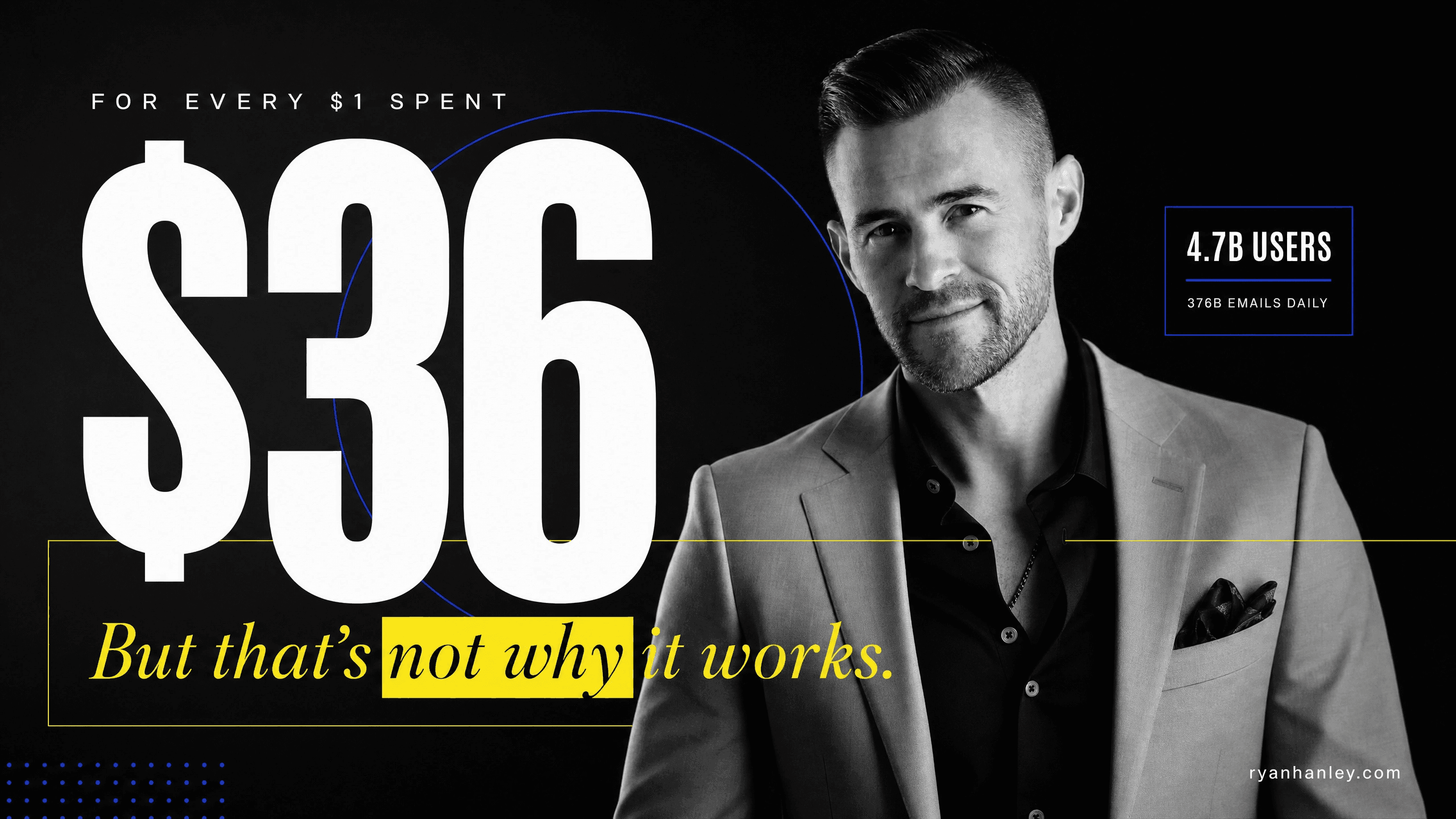
4.7 billion email users globally.
376 billion emails are sent daily.
$36 returned for every $1 spent, the highest ROI of any marketing channel on record.
(Source: Litmus 2023 State of Email report.)
Email didn't die nine times. It grew despite nine different predictions that it would...
The pattern is worth recognizing.
Every time a new platform needs you to migrate your audience onto their property, they first need you to believe your current property is worthless.
Substack telling you Gmail killed your open rates while encouraging you to move your list onto their app is not a public service announcement.
It's a pitch.

What It Actually Looks Like When It Works
I've been building businesses with email since before most people in my industry cared about it.
At Agency Nation, we built a list of over 40,000 independent insurance agents.
We couldn't outspend the incumbents. We couldn't out-brand the national carriers.
What we could do was show up in their inbox every week with something worth reading, and turn that trust into a business.
Content was the door. Email was the lock.
That list is the primary reason more than 800 people showed up to Elevate 2018.
Not paid ads. Not a PR campaign. An email list we'd spent years earning, built with content that actually mattered to the people receiving it.
When I built Rogue Risk, I applied the same model to a retail insurance agency competing in a market full of incumbents with bigger budgets.
We built a lost opportunity pipeline.
Every prospect who ghosted after a quote, every lead we couldn't reach, every contact who said "not now" went into an email sequence.
Most agencies would have wrote those off as dead. We followed up with value, consistently, over months.
It generated a steady, consistent flow of revenue from people we'd already paid to acquire once.
Email made the second contact free.
A national insurance organization acquired Rogue Risk in 2022. Email was a core reason the model worked.
When you walk into a market already holding an existing relationship, you don't compete on price. You already have the attention.
That's what nobody talks about.
The Finding Peak newsletter now runs behind the podcast as the most direct line to the people who care about this work.
READ NEXT: AI Gave You More Capacity. You Filled It With More Work.
Nobody Owns Email
Here's the real reason email survives every prediction of its death.
Email runs like infrastructure. Nobody owns the protocol. Nobody controls the delivery. Nobody can change the terms.
There's no engagement score throttling your reach. No policy update that can de-platform you overnight. Instagram owns your follower count. LinkedIn owns your connection list.
Email doesn't belong to anyone.
I watched insurance agencies spend years building Facebook pages, getting to 10,000 followers, then watching organic reach collapse to near zero between 2014 and 2016 when Facebook shifted the algorithm toward paid promotion.
All that work. Gone.
...not because they did anything wrong.
Facebook decided the lease terms had changed.
When you build an audience on someone else's platform, you are a tenant. Tenants get evicted.
A follower count can go to zero overnight. An inbox is a relationship the person asked you into.
If you need help with growth, check out my Easy Mode Method.
Why the $36 Number Gets It Wrong
Everyone who talks about email eventually quotes the ROI. $36 returned for every $1 spent. Real number. Worth knowing.
...but that stat explains the output, not the reason.
Email works because the person reading it chose to be there. They opted in. They gave you their address on purpose.
When they open your message, they're not scrolling past an ad. They decided to show up.
That changes everything about what you can say and how it lands.
On social, you're interrupting. On email, you were invited.
The quality of that attention is categorically different from any paid or algorithmic channel. So is the trust required to earn it.
That's why the return is $36 and not $3.

Growth Marketing Is Sexy. Email Is Not.
Growth hacks, viral loops, TikTok strategies, paid acquisition funnels: these feel like speed. Like someone finally cracked the code.
Email feels methodical. Slow. Boring.
And it is. That's exactly why it works.
Building an email list is not a growth hack. It's a compounding asset.
Every subscriber you earn today is a relationship you can deepen for years.
Every email you send is practice at earning attention from someone who already said they want to hear from you.
The businesses that last, that can't be taken out by a single algorithm change or a single round of ad inflation, they share one thing.
They own their audience.
Not rented. Not leased. Not dependent on a platform that can change the terms tomorrow.
Owned.
<note> I highly recommend beehiiv for building your email newsletter. This is the tool I use for my newsletter.</note>
How to Build the Asset
Start before you think you're ready. The best time to start your list was three years ago. Don't wait for a good reason. The relationship starts the moment someone gives you their address.
Give before you ask. Every email you send should make the reader better at something that matters to them. Not every other email. Every one. The moment your list feels like a sales channel, people leave.
Consistency beats frequency. One great email per week beats five forgettable ones. Show up on schedule. Say something worth reading. Do it again.
Don't abandon the ghost. Every lead who went quiet, every prospect who said not now, every contact you couldn't reach. That's a person you already paid to acquire. Put them in a sequence. Follow up with value. We generated real pipeline from people most agencies had written off as dead.
Treat it like people. The subscriber who's been on your list for two years without buying anything might refer you five clients next week. They're not a number. Act like it.
The Thing Nobody Wants to Hear
Email marketing is the single greatest tool for rapid business growth that exists.
I built companies around it. One of them got acquired. Email was not a side feature. It was the operating system.
The people who ask me about growth hacks are usually looking for a shortcut around the work. The people who ask me about email are ready to do it.
Every business operating without an owned email list is in Hard Mode by choice.
Start your list. Build the relationship. Send the email.
This is the way.
Hanley.