Key Takeaways
- →The rocket is the distraction. The infrastructure is the business.
- →Owning SpaceX isn't owning the space economy, just like owning NVIDIA isn't owning AI.
- →Science fiction becomes business when cost, customer, and timing finally agree.
Most leaders look at space and see rockets, billionaires, and science fiction.
They watch SpaceX catch a booster and assume they have seen the market. That is like watching the first web browser and believing you understand the internet.
Mark Boggett sees something else. As CEO and General Partner of Seraphim Space, he spends his time studying the SpaceTech infrastructure forming around launch, data, positioning, communications, power, and manufacturing. His message for founders is blunt: SpaceX may be the most visible company in the category, but visibility is not the same as opportunity.
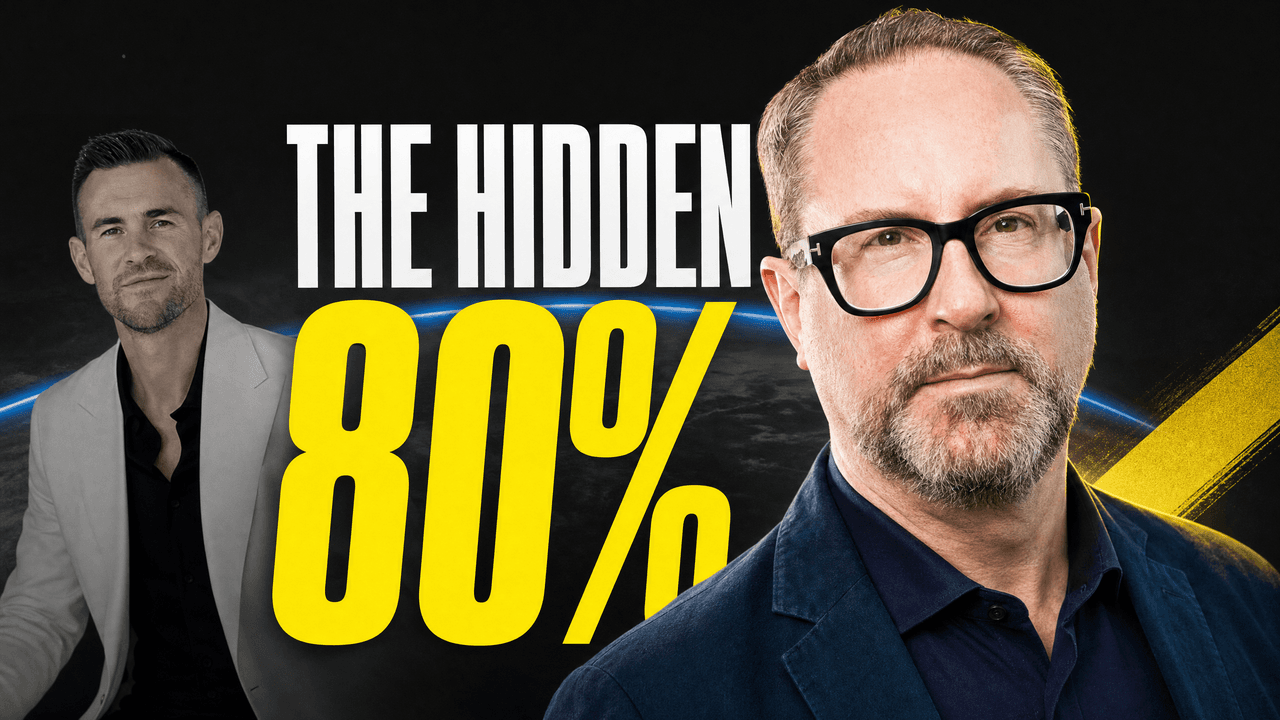
SpaceX is fantastic, but look at the other 80%.
That line is the operating system for this episode.
Space is no longer a destination reserved for governments and astronauts. It is becoming a horizontal business layer. Companies are using satellites to assess flood damage, protect supply chains, improve positioning, track orbital debris, and build new sources of power. These are not side projects for people wearing lab coats and talking about Mars colonies. They are commercial systems serving customers on Earth.
The shift matters because founders tend to overvalue the obvious winner and undervalue everything the winner makes possible. We stare at the quarterback and forget the offensive line. Then we wonder why someone else owns the category around security, data, logistics, and services.
The rocket is the distraction. The infrastructure is the business.
Connect with Mark Boggett
Website: https://seraphim.vc/
The Real Space Economy Is the Infrastructure Layer
Mark made a distinction early in our conversation that should change how leaders think about this market.
AI is not a sector. Space is not a sector.
Both are horizontal technologies. They do not sit inside one clean industry box. They spread across industries and change what those industries can do.
AI is showing up in insurance, health care, manufacturing, finance, sales, and every other corner of the economy. Space technology is moving the same way. It powers communications, weather data, military intelligence, crop monitoring, financial timing, disaster response, mapping, and transportation.
This is why owning a piece of SpaceX does not mean you understand or own the commercial space economy. Mark compares that mistake to owning NVIDIA and assuming you have covered the entire AI market. One company may provide a major platform, but thousands of businesses will build products around the platform.
Founders have seen this movie before.
The smartphone did not create one winner. It created app stores, mobile advertising, payment systems, ride-sharing, delivery networks, creator platforms, security tools, and a long list of businesses nobody could see when the first device appeared.
Cloud computing did the same. Amazon, Microsoft, and Google built the base. The larger commercial story included software, cybersecurity, data engineering, remote work, and a new generation of subscription businesses.
Space is moving into that phase now. Lower launch costs and better hardware are expanding the number of problems companies can afford to solve. When access gets cheaper, founders stop asking, "Can we reach orbit?" They start asking, "What can we build once access is available?"
That second question is where the money gets interesting.
SpaceTech Infrastructure Is Already Changing Business on Earth
The fastest way to make space feel practical is to stop looking up. Look at the problems on the ground.
Earth observation is one of the clearest examples. ICEYE operates synthetic aperture radar satellites that can monitor changes on Earth through cloud cover and darkness. In the episode, Mark uses insurance to show why that matters.
After a flood, the old process can be slow and messy. An insurer needs to understand where the water went, which properties were affected, and how severe the damage may be. Policyholders want money. Adjusters need access. Local officials are dealing with public safety. Everyone has a different view of the event.
Satellite radar data can give them a shared source of truth. It can help identify the flooded area and support faster decisions. The commercial value is not the satellite itself. The value is what better data allows the insurer to do for the customer.
That is the pattern founders should study. A technology becomes valuable when it removes an expensive delay, reduces uncertainty, or makes a decision easier.
Positioning is another example. GPS has become so normal that most of us treat it like oxygen. Yet the system was not designed for a world filled with autonomous cars, drones, robots, and machines that need secure, precise location data.
Mark's critique is not subtle. He argues that current GPS accuracy and signal security are not enough for the autonomous future. Companies such as Xona are building positioning, navigation, and timing infrastructure in low Earth orbit to improve accuracy and resilience.
A human driver can recover when a map app places the car on the wrong side of the road. An autonomous machine may not have that margin. A few meters can be the difference between the right lane and oncoming traffic. A weak signal can also be jammed or spoofed, which turns a convenience problem into a security problem.
The founder lesson is bigger than GPS. Mature systems often look permanent right before a new use case exposes their weakness. The opportunity does not always come from inventing a new category. Sometimes it comes from rebuilding an old layer for a more demanding future.
Orbital traffic management follows the same logic. More satellites in low Earth orbit mean more useful services, but they also mean more congestion and collision risk. Operators need to know what is moving, where it is moving, and whether two objects are headed toward the same place.
Mark describes LeoLabs with a line that makes the business instantly clear:
These guys have the Google Maps of space.
LeoLabs uses radar data and software to support orbital intelligence, traffic management, and collision avoidance. The phrase works because it translates a technical company into a familiar job. If commercial activity is moving into orbit, someone needs to map the roads.
A new market rarely needs one product. It needs an ecosystem of boring services that make the exciting product safe, dependable, and usable. Boring is not an insult. Boring is what infrastructure looks like after it starts working.
Falling Costs Create a Founder Flywheel
The most important part of the SpaceX story may not be the company itself. It may be the people leaving the company.
Mark calls SpaceX a kind of university for space operators. Employees spend years solving hard engineering, manufacturing, launch, software, and logistics problems. Some of them earn enough money to take a risk. Then they leave with knowledge, relationships, and a clearer picture of the problems still waiting to be solved.
That creates a founder flywheel.
We have seen it around other category-defining companies. Former employees carry hard-earned pattern recognition into new ventures. They know where the system breaks. They know which internal tools should become products. They know what customers complain about. They know which part of the process is held together with tape and caffeine.
This matters for leaders outside the space industry because the same signal appears in every platform shift. When a company gets large enough to train thousands of people inside a new operating model, it becomes a talent factory for the next wave.
Watch the alumni. Watch the vendors. Watch the customers asking for features the platform company does not want to build.
The category leader creates attention. The people around it create the market.
For a founder, the goal is not to copy SpaceX. The goal is to find the necessary company SpaceX does not need to become. That might be data software, insurance products, compliance tools, component manufacturing, cyber defense, traffic management, or power systems.
This is a cleaner way to study opportunity. Start with the platform. Map the friction around it. Then ask which friction becomes more painful as the platform grows.
Growth creates problems. Problems create markets.
Power, Manufacturing, and Making Science Fiction Boring
The later part of our conversation moves into ideas that sound farther away: space-based solar power, compact nuclear batteries, and off-planet manufacturing.
Mark's argument is not that every ambitious idea is ready for a purchase order. His argument is that the economics are moving.
On space-based energy, he says:
This is a financial problem, not a technology problem.
The claim rests on launch cost. If moving equipment into orbit remains expensive, the business case fails. If heavy-lift launch systems push that cost down, ideas that have existed for decades can return with a different spreadsheet.
This is where leaders need discipline. A falling cost curve can open a market, but it does not erase regulation, safety, financing, or execution risk. Mark refuses to pretend he can predict the exact share of future energy that might come from space.
I don't have the stats, and anyone who does is making them up.
That answer may be the most credible moment in the episode. Founders are trained to project confidence. Investors are trained to sell the size of a future market. Adults know the difference between a thesis and a fact.
The useful thesis is that cheaper access changes what can be tested. Space-based solar may become more attractive. Compact nuclear batteries may support long-duration missions in deep space or the deep sea. Microgravity manufacturing may produce materials that are difficult to make on Earth. Robotic systems may use local resources rather than hauling every pound from the ground.
None of that requires blind faith. It requires watching the inputs.
Track launch cost. Track power density. Track reliability. Track regulation. Track customer demand. When several inputs cross a threshold at the same time, the market can move faster than the old mental model allows.
Science fiction becomes business when the cost, customer, and timing finally agree.
The Next Opportunity Hides Between Technologies
Mark closes the episode by connecting space with AI and quantum computing. This is where the conversation gets speculative, but the founder framework stays useful.
Space systems create enormous amounts of data. AI helps process that data, detect changes, and turn raw signals into decisions. Quantum technology may first matter through secure communications and, over time, greater computing power.
The mistake is studying each technology as a separate trend.
The larger opportunities often sit at the intersection. Better satellite data becomes more valuable when AI can interpret it. Autonomous machines become more useful when positioning gets more accurate and secure. Space-based infrastructure becomes more capable when power, computing, and communications improve together.
Founders love clean categories because categories make decks easier to explain. Markets do not care about our decks.
The best businesses may be hard to label at first. They combine hardware and software, public and private customers, terrestrial problems and orbital assets. They look strange because the old category map has not caught up.
That is a feature, not a flaw.
The practical move is not to chase every shiny technology. It is to look for a customer problem that becomes solvable when two or three cost curves move at once. Then build the bridge between those capabilities and the buyer who needs the outcome.
Space is not waiting for permission to become part of the business world. The systems are being built. The founder talent is compounding. The use cases are moving from military and government programs into commercial markets.
If you lead a company, your job is not to become an aerospace engineer overnight. Your job is to update the map.
Watch the full conversation on YouTube or listen to the audio episode. Then visit Seraphim Space to see the companies building the infrastructure Mark and I discuss. If you want more conversations that turn chaos into clarity, subscribe to the newsletter.
This is the way.
Hanley.
Follow Ryan
Website: https://ryanhanley.com
Instagram: https://instagram.com/ryan_hanley