Key Takeaways
- →Strategy is 3% of the game. Execution is the other 97%. Stop workshopping.
- →Engaged employees mean nothing. Engaged with value creation is the only metric that matters.
- →The struggle isn't the toll you pay for success. It builds the person who earns it.
Lee Benson started working at six years old. A neighbor flagged him down on his bike and offered 25 cents an hour to pull weeds.
This was the mid-sixties. He says earning his own money felt so good he never stopped. Shoveling snow, mowing lawns, paper routes, dishwasher, busboy, cook.
By the time he was kicked out of his house at the start of senior year, he could already afford his own apartment.
Forty-six years later, he calls it an overnight success story.
I sat down with Lee for this episode of Finding Peak to dig into value creation, a phrase most leaders nod at and few can define. Lee can define it.
He grew Able Aerospace from two employees to more than 500, serving 2,000 customers across 60 countries, and sold it in a nine-figure exit.
Now, as CEO of Execute to Win, he installs the same operating system inside companies from startups to $100B market caps.
Why does this matter right now? Because every founder I talk to is drowning in activity and starving for traction. AI is about to flood every business with more output than any team can absorb. Output was never the bottleneck. Value was. The leaders who know the difference are about to lap the field.
Here's what I took from the conversation.
Connect with Lee Benson
Website: https://etw.com
Dinner Table: https://dinnertable.com
Execution Is Not a Synonym for Hard Work
I opened with the question I cannot stop chewing on. We all know people who grind 20 hours a day and stay stuck. We all know people who seem to move less and win more. What separates them?
Lee didn't hesitate.
To me, execution is creating objectively measurable value.
Three dimensions, in his framework. Material value, the money part everybody gets. Positive emotional energy, which he calls the scarcest commodity on the planet and the X factor for leaders. Spiritual value, meaning connectedness, to self, family, community, and beyond, whether you're religious or not.
Then the line that became this episode's title:
Knowing what to do is pretty straightforward for the most part. That's only 3% of the equation. 97% is actually executing on it.
Read that again.
Your strategy, the thing you spent two days and a five-figure catering bill workshopping at the offsite, is 3% of the game. The other 97% is the part nobody wants to systematize.
This is why the engagement industry gets under my skin. Companies survey employees, the employees say they're engaged, everybody high-fives. Lee asks the only question that matters: engaged with what? He wants productive engagement, people leaning into the value their role was designed to create. Not a best friend at work. Not ping pong. Production.
I watched this play out in the early Silicon Valley era. Beanbags and cold brew were never the reason people stayed.
They stayed because they believed they were building something that mattered. The perks were decoration. When the best friend left, the engagement left with her.
The Role Designed for Value Creation
Here's a test Lee gave me that you can run tomorrow. Ask anyone on your team how they create value for the business. If they read you their job description, you found your problem.
A job description is a list of activities. Activities are not value. So Lee burns the whole format down and rebuilds the role around three categories.
First, outcomes. The one to three results the role is accountable for. Preferably one. You can measure plenty of things, but everything is subordinate to the one. Hit it, things are great. Fall below the line, everybody knows, in real time. No annual review theater.
Second, capabilities. The skills required to have a real shot at those outcomes. That list becomes the person's training program. You're developing them on purpose, not hoping osmosis works.
Third, general duties. The stuff we all do because we work here. Clock in, answer the thing, show up to the meeting. It goes last because it matters least.
Now the role tells the truth. And something shifts in the person holding it. Lee's phrase: they start acting like the CEO of their own role.
He watched a salesperson join his aerospace company and sell a million dollars in year one, thrilled, never done that before. Sixteen years later, when Lee sold the business, that same person was responsible for about $40 million a year. Forty X. Same human. Developed on purpose.
My favorite Lee line of the whole episode:
"If an employee ever said, I want to make a million dollars a year, we shouldn't laugh. We should ask the question, what do you think it would take for you to do that?"
Most employees never connect the dots between what they're paid and the value required to justify it. Lee does the math with them. Win-win or it doesn't happen.
I ran a version of this at my agency without knowing what to call it. My producers started pushing on commission splits around year two, so I built a monthly profit statement for each of them. Revenue they generated, minus salary, benefits, 401k match, commission. Here's the profit your seat created. Two reactions followed. Most people said some version of, nobody ever showed me this, I get it now. One guy quit, because he couldn't negotiate against arithmetic.
Lee took the same idea further than I ever did. Open books for all 540 employees, every month, down to a plain-English trial balance for the folks cleaning parts. Frontline people started asking why the company spent that much on tape. Then he took 22% of pre-tax profit and paid it back monthly, proportional to income. Best month ever for the frontline: a 31% bonus. Senior leaders driving global business had a 2x multiplier.
His reasoning: compensation is one of the single biggest drainers of productive energy in a business when it's not perceived as equitable. Once the system was in place, the negotiation noise stopped. He got half his week back.
And the problem children? They self-select out of systems where nobody can hide.
Twenty-Two Initiatives and a Category Called Please Do Your Job
Every leader reading this has lived the Nashville problem. The strategy offsite ends with table-pounding and beer and photos of the whiteboard. Then Monday shows up and everyone goes back to doing what they did before.
The meeting made everyone feel good. It changed nothing.
The rah-rah offsite is where execution goes to die.
Lee gets the strategy decks before he walks into client companies, startups and giants alike. A hundred initiatives is normal for a big one. His move: "Out of the hundred strategic initiatives in a really large business, only 22 are actually strategic initiatives." The kind that cause a step change in the value of the business. "The rest of them, I put them in this category called please do your job."
Then the 22 get divided by function and assessed. Risk to the business if you skip it. Impact if you do it. Difficulty, cost, timeline, milestones. One accountable leader per initiative. Tracked every single week.
For middle market and below, he caps it at three or four. Meaty ones.
The other execution killer lives in the mirror. The CEO who can't get out of the middle of every project. Lee's warning: when the CEO keeps a toe in everything, failure has a built-in excuse. I did what you told me. It was your idea. Ownership evaporates.
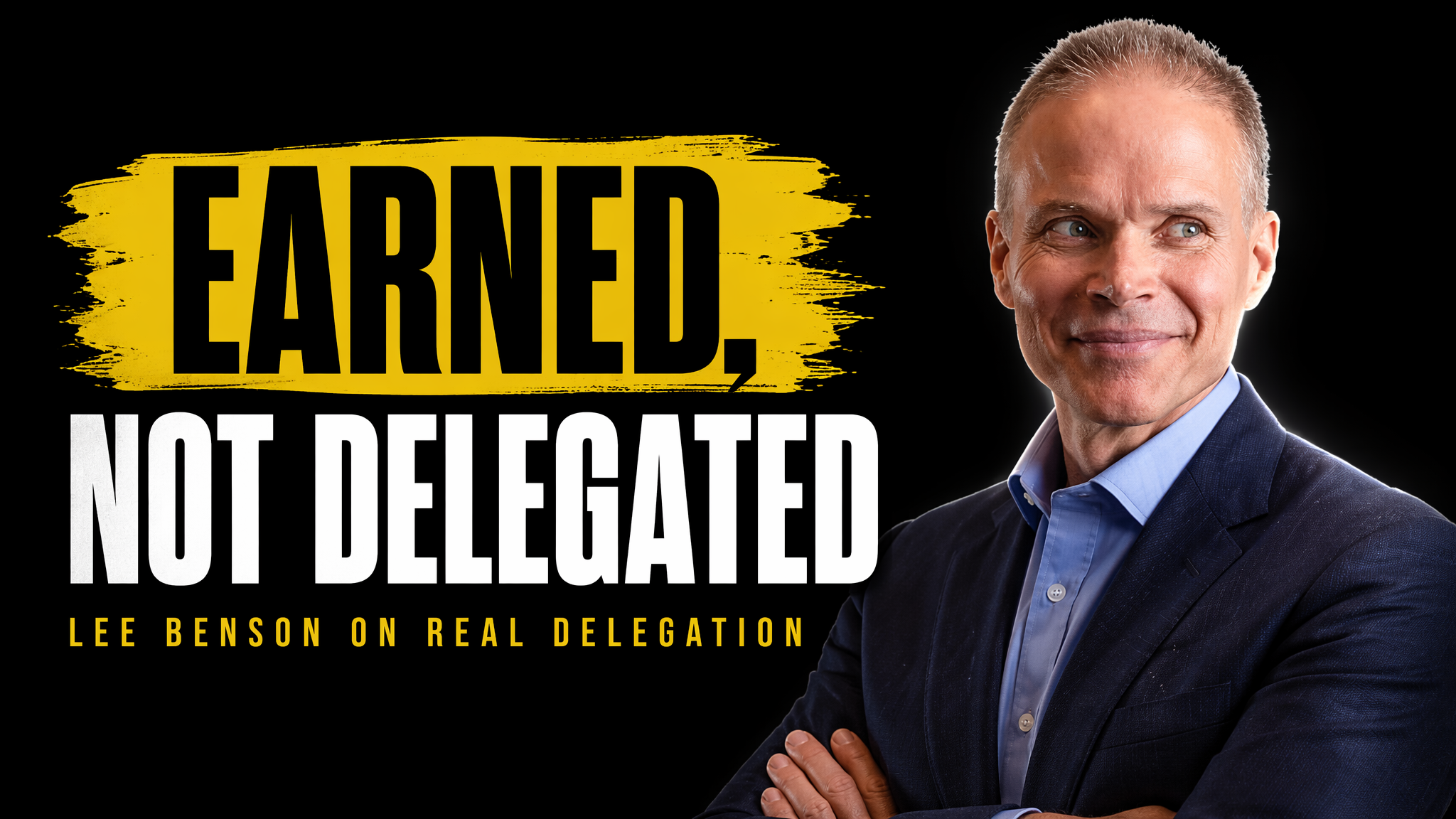
His answer is earned decision rights. Not delegation, a word he has no patience for. You don't hand over authority because a book told you to. The team member earns it, decision by decision, and the ceiling rises over time.
The story: a gentleman walked into Lee's office wanting approval to buy a million-dollar machine for the shop. Lee asked why he was standing there. "You have earned the decision making rights up to just over a million bucks. You don't need to be here."
Other people in the same company needed approval to spend a dollar, because they hadn't proven the ROI mindset yet. Same company. Different ceilings. All of it earned.
I felt this in my bones because I lived the flip side. Three and a half years into my agency, I opened my calendar one morning and found it empty. My assistant Clarissa had pulled me out of both meetings. We know what you want, we got it, go golf.
I drove to the range and hit balls, slightly wounded, mostly proud. In that empty afternoon I mapped a referral channel that became a real lead source for us. The visionary work only shows up when the operator work is off your desk.
WATCH HERE: How Mental Performance Training Rewires Your Self-Image
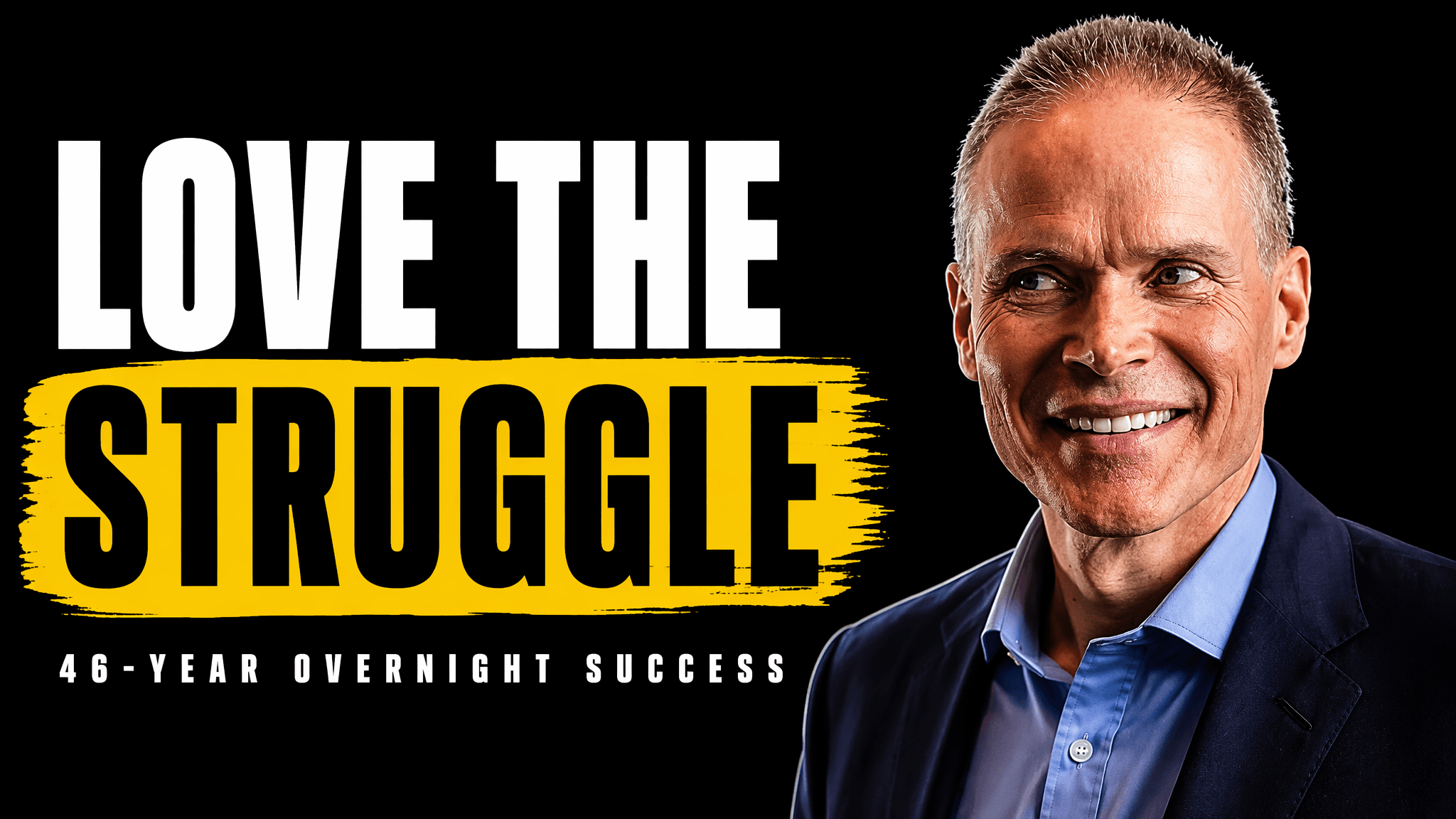
Love the Struggle
Somewhere in the middle of all this systems talk, Lee said the quiet part.
"If it was perfect every single day, why would I need a leader?"
He calls it the value creation cycle. Struggle to build a capability. Use it to create value. Feel the internal fulfillment. Take a bigger step. Repeat for 46 years. Weeds at six. Kicked out at seventeen.
A thousand shows playing guitar in a rock band through the first half of the eighties. First real business in 1993. His most important internal number isn't revenue. It's fulfillment, trending up, every year.
Then he told me the part that recontextualized all of it. After he was kicked out, his mom called. First words: filed for bankruptcy, you'll be fine.
She had charged four credit cards in his name, over $2,000 each, at 23 to 28% interest, because she had his Social Security number. He works with low-income families now and says it's common. Scared parents doing scared things.
His read on his own childhood: he had an advantage over every one of the other 3,400 students in his high school. Not despite the chaos. Because of it.
That's why his second company exists. Lee is the CEO of two businesses: Execute to Win for organizations, and Dinner Table for families, a community of more than 40,000 parents.
The mission: stop removing every healthy struggle from your kids' lives. Decide what kind of adult you're trying to raise, then design the struggles that build that person. An eighteen-year-old who never struggled isn't loved. They're unprepared.
I grew up poor in a rural town, collecting five-cent bottles before school with a Radio Flyer wagon, so this landed somewhere deep. The destination people and the journey people are both half right.
The struggle isn't the toll you pay for the life you want. It's the construction of the person who gets to live it.
The AI Conversation We Are Not Having
I closed by asking Lee what we're missing about AI. His answer had nothing to do with models or prompts.
AI probably isn't going to take your job, but somebody with AI skills likely will.
His bigger point: he doesn't believe we're creating even 10% of the value we could be, as a country, and AI is the biggest accelerator of value creation he's ever seen. That's his take, and after an hour with him I understand the math behind it.
But here's the blind spot he keeps walking into in boardrooms. Leaders are firing their coaches and skipping their CEO groups because the chatbot is always available and always agreeable. His diagnosis: you get amazing answers to the wrong questions. A tool designed to agree with you cannot replace a room full of people who have scars you don't.
Then he went one step further, and I've been chewing on it since we stopped recording. AI can make every company look like the best company on the planet. Every email, every ad, every pitch, polished to a mirror shine. Which means the signal value of all of it is collapsing.
His response:
I literally believe almost nothing I read, see, or hear anymore, unless it's through a trusted source.
The asset that survives is your trusted relationship network. People whose judgment you've watched hold up over years. Lee had t-shirts made that say there's nothing wrong with thinking. I might order one.
Build the network. Keep the coach. Use the tools to go faster in a direction you chose on purpose.
If this episode hit, the full conversation is worth your hour.
Listen wherever you get your podcasts or watch it on YouTube.
And if you want more of this every week, the newsletter is where I do my best work: ryanhanley.com/subscribe
This is the way.
Hanley.